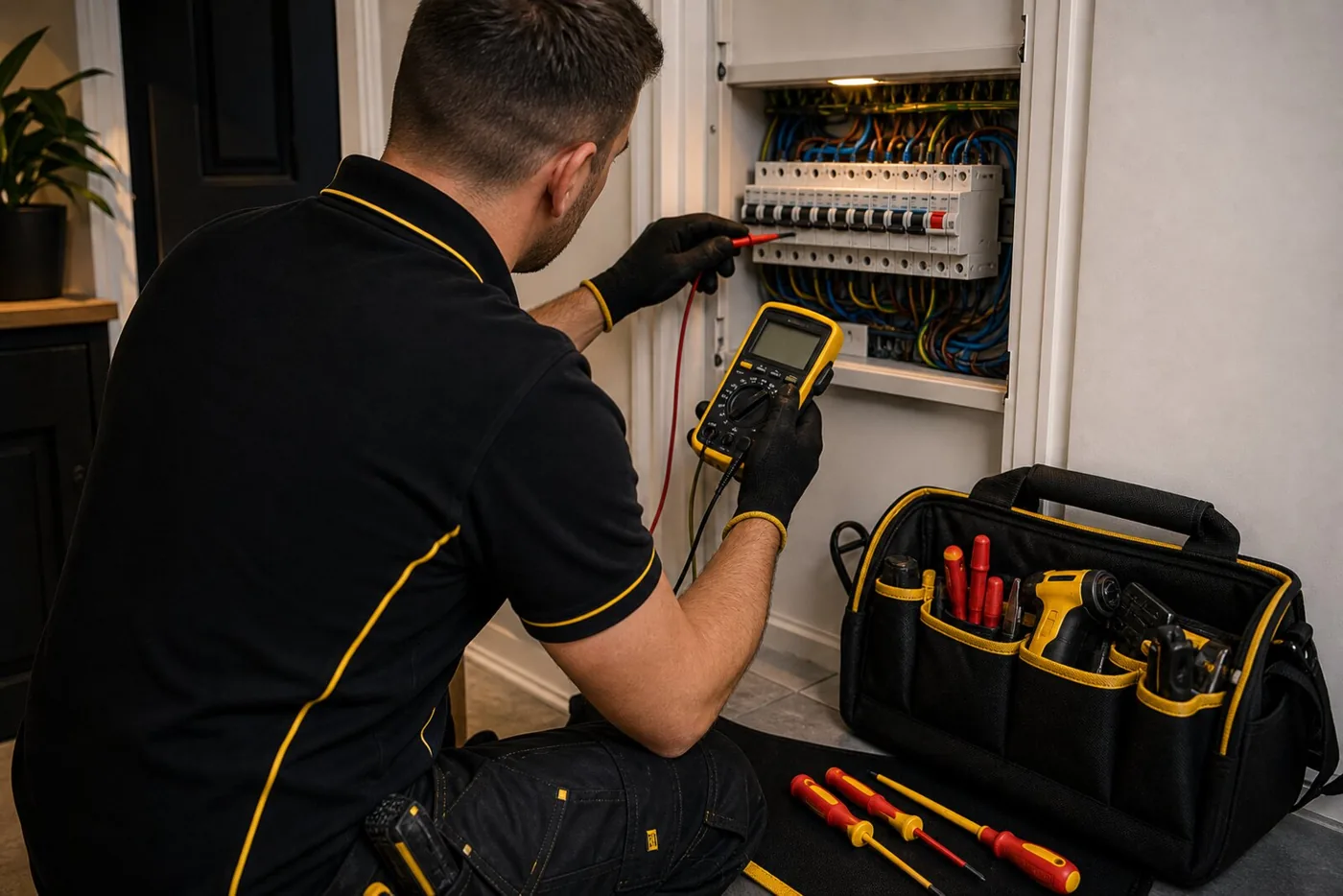
If you own, rent out or manage a property in Doncaster, electrical standards matter because they shape how new work is designed, tested and certified.
BS 7671 is the UK wiring standard used by electricians. Amendment 4 was published on 15 April 2026, with a six-month transition ending on 15 October 2026. The update does not automatically mean an existing home needs rewiring or a new consumer unit.
What has changed in 2026?
The IET and BSI confirmed Amendment 4 to BS 7671 in January 2026, with publication from 15 April 2026. The update includes new and revised material covering areas such as stationary secondary batteries, functional earthing, Power over Ethernet and medical locations.
The IET states that Amendment 4 can be used from publication and that Amendments 2 and 3 are withdrawn on 15 October 2026. Ask which edition applies to the design and certification of planned work, especially where a project crosses that transition.
What this means for Doncaster homes
Older properties around Doncaster often have a mix of original wiring, later additions, old accessories and newer circuits. That does not automatically mean a full rewire is needed, but it does mean assumptions are risky.
Before quoting for larger work, it is sensible to look at the consumer unit, earthing and bonding, circuit condition and any signs of previous DIY work. That gives a clearer view of whether the job is a straightforward addition or whether remedial work is needed first.
What RCDs, RCBOs and consumer unit protection do
Where an EICR helps
An Electrical Installation Condition Report is useful when you are buying, renting out, renovating or trying to understand an older installation. It checks the condition of the wiring and protective devices and records observations using clear codes.
If the report is unsatisfactory, the next step is not guesswork. The required remedial work can be quoted properly and completed with the right paperwork.
EICR inspection and testing in Doncaster
Does older wiring automatically fail an EICR?
No. The IET explains that standards are not retrospective: an installation built to an earlier edition is not necessarily unsafe. Inspection findings depend on the condition, risks and suitability of the installation, including any later alterations.
Ask the inspector to explain the observations and which work is required, recommended or outside the agreed inspection scope. That is more useful than treating the age or colour of the consumer unit as a diagnosis of the whole house.
What to ask before work starts
For a kitchen alteration, extension, new circuit or consumer unit replacement, provide the existing EICR if available, appliance details and a list of planned additions. Ask whether the quotation includes investigation of existing circuits and how unexpected defects will be agreed.
Keep the completed electrical certificate and any applicable Building Regulations compliance certificate with the property records. These describe the work carried out and are useful for later inspections, alterations or a sale; they should not be confused with a quotation or invoice.
Useful jobs to review in 2026
- Consumer unit upgrades where protection is outdated.
- EICR checks before letting, selling or renovating.
- Extra sockets to reduce extension lead use.
- Outdoor circuits checked for RCD protection and weatherproofing.
- Lighting upgrades where old fittings are unreliable or inefficient.