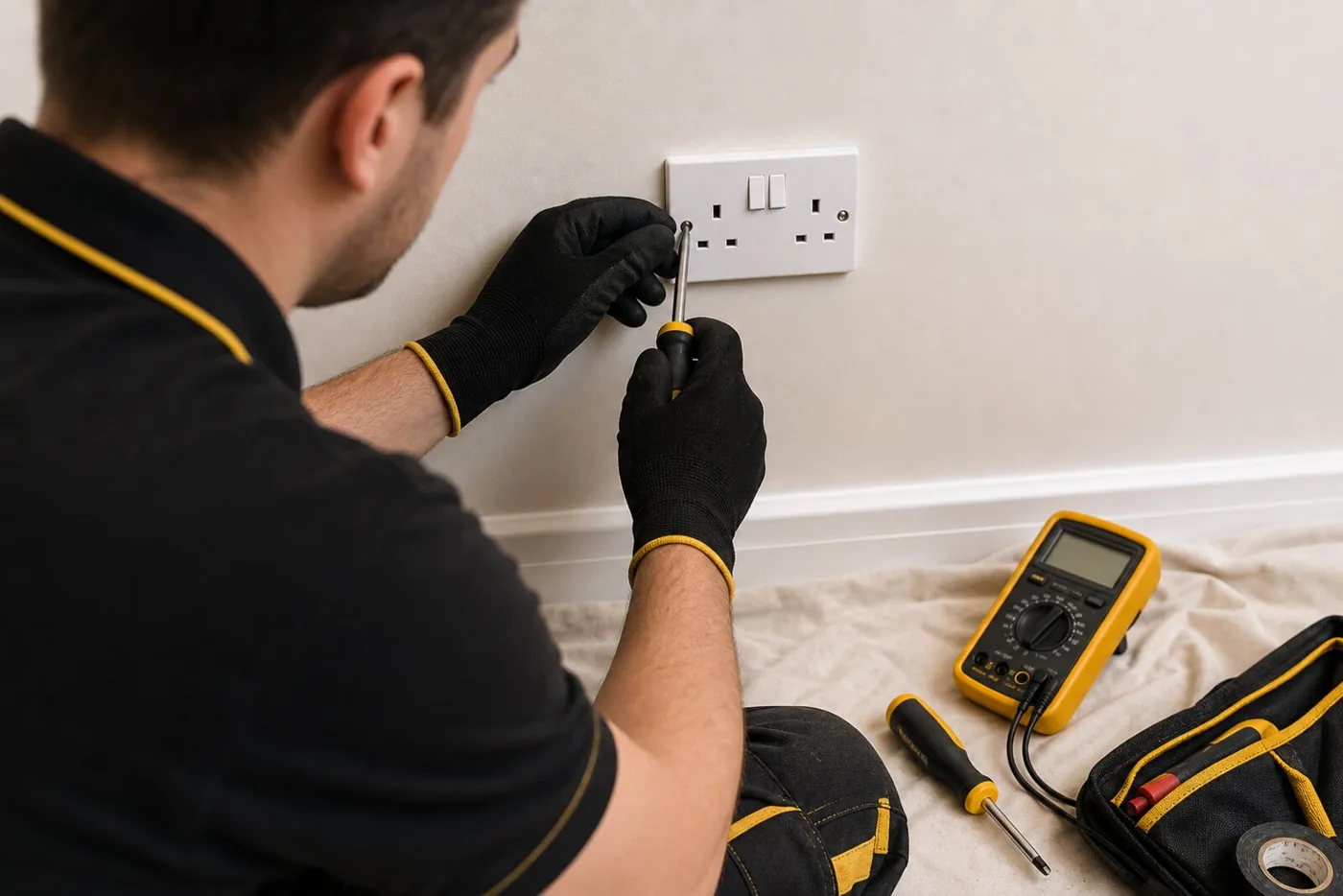
A lot of domestic electrical enquiries start with one small job: a socket in the wrong place, a light that needs changing, a cooker connection, a tripping circuit or a consumer unit that looks past its best.
The useful question is whether anything else should be checked or grouped at the same time. That does not mean turning a small job into a large one. It means avoiding repeat visits, rushed decisions and alterations that make sense on the surface but do not suit the circuit behind the faceplate.
Start with what has changed in the house
Domestic electrical work is usually driven by a change in how the home is used. A spare room becomes an office, the kitchen gains more appliances, a garage starts being used as a workshop, or a bedroom needs better sockets and lighting.
That context matters. One extra socket may be straightforward, but a room full of extension leads, warm accessories or an old circuit that already trips needs a more careful look before new points are added.
Group the jobs that use the same access
If floorboards, loft access or kitchen units need moving, it is worth thinking about nearby jobs at the same time. Extra sockets, lighting changes, outdoor power and damaged accessories can sometimes be planned together so the disruption is kept sensible.
For Doncaster homes being decorated or renovated, this is often the difference between a tidy electrical alteration and patching the same wall twice.
Do not ignore tripping or heat while planning upgrades
A circuit that keeps tripping, a socket that feels warm or a switch that buzzes should be treated as a fault first, not as a cosmetic replacement job. Electrical Safety First advises periodic inspection and testing to find risks such as overloaded circuits, defective electrical work and shock or fire hazards.
If there is a fault in the background, adding new accessories will not make it go away. Proper fault finding gives a clearer answer before money is spent on the visible part of the job.
Know when an EICR is the better first step
For an owner-occupied home, Electrical Safety First says electrics should usually be inspected and tested every 10 years. For rented homes, GOV.UK guidance says fixed electrical installations must be inspected and tested by a qualified person at least every five years.
If the property is older, newly bought, being let, repeatedly tripping or has had years of small alterations, an EICR can be a better starting point than guessing from one symptom.
Ask for current-standard work and clear paperwork
Ask what testing and certification the work includes. A new circuit, a consumer unit replacement and a small alteration do not all involve the same paperwork. The electrician should explain the proposed work, any Building Regulations notification and whether existing defects need attention first.
When you ask for a quote, send the postcode, photos of the consumer unit, photos of the job area and a short list of everything you are considering. That gives the electrician a better chance of spotting the practical route before arriving.
Domestic electrical services and small jobs in Doncaster
What affects the quote for a small electrical job?
The price depends on access to the cable route, the condition of the existing circuit, the fittings chosen and any repair or making-good work. A socket beside a suitable existing point can be a very different job from one across a tiled kitchen or solid floor.
Separate urgent repairs from optional upgrades in your list. Ask whether the quote includes supplying accessories, electrical testing and any wall repairs, and mention when decorating or kitchen fitting is booked. That makes it easier to compare quotations for the same work.
Before asking for a domestic electrician
- List all the small jobs in the room or same part of the house.
- Mention any tripping, buzzing, heat, burning smells or damaged accessories.
- Send photos of the consumer unit and the area where work is needed.
- Say whether the property is owner-occupied, rented, newly bought or being renovated.
- Ask what testing or certification will be provided for the work.