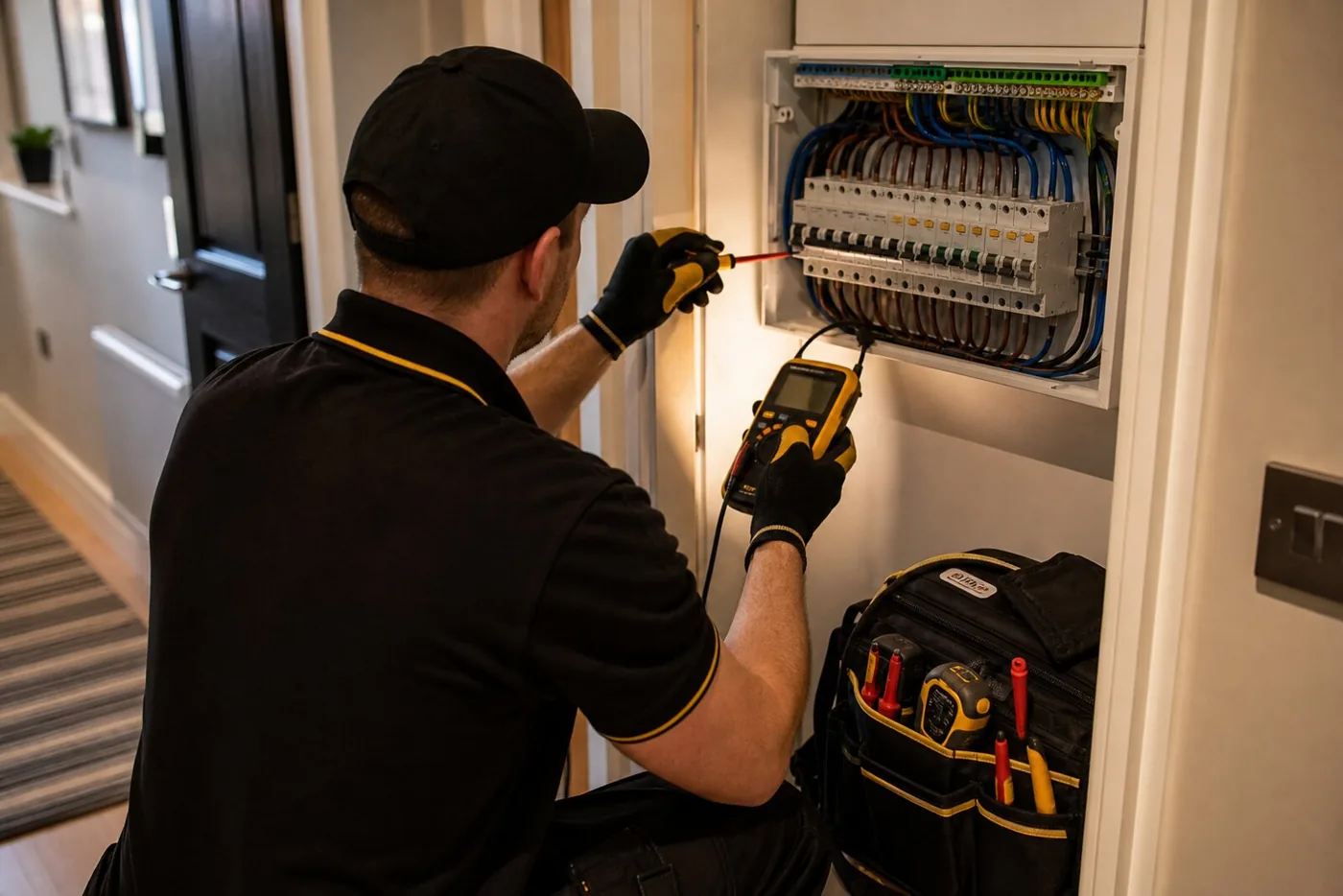
A consumer unit is the main point where your electrical circuits are protected and controlled. In older homes, it may still be called a fuse box.
The main difference is this: an MCB protects against overcurrent, an RCD detects residual-current faults, and an RCBO combines both functions for a circuit. A surge protection device has a separate job, helping limit short voltage spikes. These devices are not substitutes for one another.
RCD vs MCB: what does each protect against?
An RCD is designed to disconnect power quickly if it detects an imbalance that could indicate current flowing somewhere it should not, such as through a person or to earth.
A standard MCB trips for overloads or short circuits. It does not provide the same residual-current protection as an RCD. Equally, an RCD without overcurrent protection needs the appropriate fuse or circuit breaker alongside it. The combination and device type must suit the installation.
Why RCBOs are often preferred
An RCBO combines overcurrent protection and residual current protection for an individual circuit. In practical terms, a fault on one circuit is less likely to take out half the property.
That can make fault finding easier and reduce nuisance when a single appliance or circuit has a problem.
Why only part of a house loses power when an RCD trips
Where surge protection fits
A surge protection device, or SPD, limits transient overvoltages that can damage equipment. It does not replace RCD or overcurrent protection and does not fix loose connections, overloads or deteriorating wiring.
When upgrading a consumer unit, it is worth discussing surge protection, labelling, future circuits and whether any existing faults need fixing first.
Does an old fuse box always need replacing?
Age is a reason to investigate the condition and protection, not enough on its own to decide the whole installation is unsafe. An older board may lack protection needed for proposed work, but the circuits, earthing and bonding need assessment too.
Replacing the consumer unit does not renew the cables in the walls. Where there are symptoms or an unclear history, testing helps separate a board upgrade from circuit repairs or a wider rewiring job. Ask for the reason behind each recommendation.
What happens during a consumer unit upgrade?
The electrician checks the existing installation, agrees the circuit arrangement and protective devices, and plans safe isolation of the supply. Existing defects may need repair before circuits can be connected to the replacement board.
Expect an interruption to power and discuss any equipment that needs special arrangements in advance. The completed work needs inspection, testing, circuit labels and an Electrical Installation Certificate. In England, replacing a consumer unit is also notifiable under Building Regulations.
Consumer unit upgrades and fuse-box replacement in Doncaster
What should a consumer unit quotation include?
Send a clear photograph with covers closed, the property postcode, any EICR and a list of symptoms or planned new circuits. Ask which protection is proposed, what testing is included and how any existing faults will be priced.
Access, the number and condition of circuits, earthing or bonding work, supply-isolation arrangements and the chosen devices all affect the job. Compare that scope rather than only the price of the empty consumer unit.
When tripping needs attention first
A protective device that repeatedly trips is reporting a problem. Do not bypass it, fit a larger breaker or keep resetting it to restore power. Arrange fault finding so the cause can be identified.
With heat, buzzing, a burning smell or damage at the board, stay away from exposed parts and seek urgent help. If there is smoke or fire, get out, stay out and call 999. A planned upgrade enquiry is not the route for an active fire.
Signs your board needs looking at
- Rewireable fuses or very old protective devices.
- No clear circuit labels.
- Repeated tripping or one fault turning off many circuits.
- Damage, heat marks or buzzing near the board.
- New kitchen, extension or outdoor power work being planned.