Buying a charger, extension lead or small appliance online is normal now, but the risk is that a product can look fine in the listing and still be poor quality when it turns up.
That matters in Doncaster just as much as anywhere else. If a cheap adaptor overheats, a plug is badly made or the product is not actually built for UK use, the problem shows up in your socket, not on the seller's webpage.
Why this is worth paying attention to in 2026
GOV.UK's OPSS recall and alert page is still being updated regularly in 2026, which is a useful reminder that unsafe products do keep reaching UK homes. Electrical Safety First is also still warning buyers about counterfeit and substandard goods sold through online marketplaces.
The common pattern is not always a dramatic failure on day one. Sometimes the product simply runs hot, feels loose in the socket, arrives with poor instructions or turns out to have missing markings and a questionable plug. Those are exactly the sort of warning signs that are easy to ignore until there is a tripping fault or damaged accessory.
Before you buy, check who is actually selling it
Electrical Safety First recommends buying from a retailer you trust, either directly from the manufacturer or from an established UK retailer. That is the simplest way to reduce the chance of getting counterfeit or substandard kit.
If the price looks unusually low, slow down and check the seller details properly. A .co.uk web address on its own does not prove the supplier is UK based, and a vague seller profile or no proper address is a reason to be cautious.
Keep the order confirmation, seller name and exact model number. On a marketplace, the seller can be different from the company operating the website. Search the model in the official recall databases before using it, particularly for second-hand products or unfamiliar brands.
How to check an electrical product recall by model number
What to look for when the product arrives
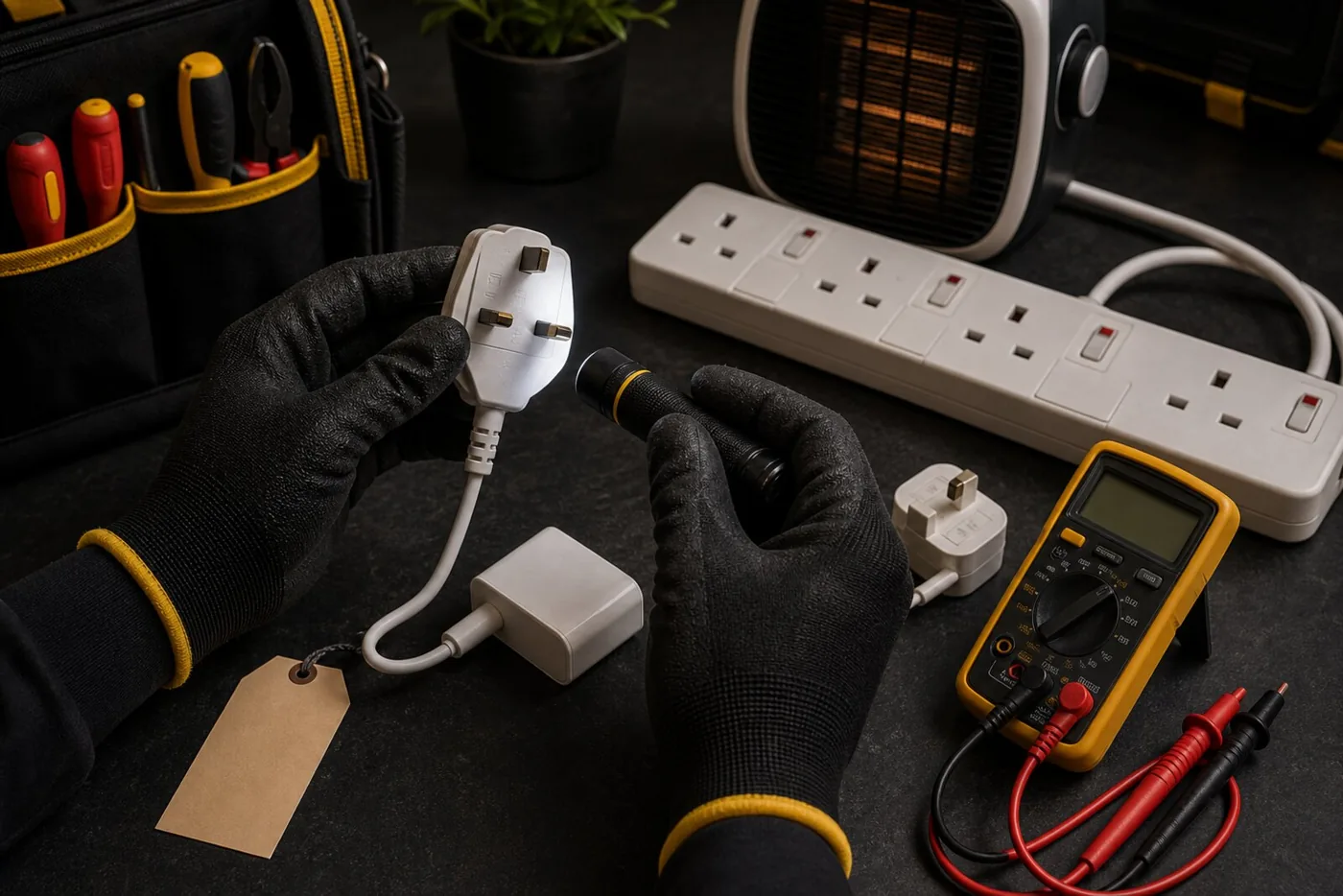
Give the packaging and the product a proper look before you use it. Electrical Safety First says common warning signs include a plug without a fuse, a non-UK plug, a travel adaptor in the box, missing instructions, no rating plate, spelling mistakes or poor labelling.
For most household items, you would expect the manufacturer name or trademark to be shown, along with markings such as CE or UKCA. Those markings can still be copied, so they are not proof on their own, but their absence is a bad sign.
What to do if something feels off
Do not keep using a product that runs excessively hot, crackles, smells odd, has a loose plug top or looks different from the genuine version sold by a trusted retailer. Electrical Safety First advises stopping use if you are concerned and raising it with the retailer, manufacturer or Trading Standards.
If the item is already on a recall list, follow the recall instructions. If it is not on a recall list but still looks unsafe, treat that seriously anyway. A damaged socket, heat marks around an outlet or repeated tripping after using one product is the point where the fixed wiring should be checked too.
A sensible habit for local households
Many Doncaster homes have a mix of older sockets, extension leads, USB adaptors and plug-in devices spread across bedrooms, home offices and kitchen worktops. That mix is manageable when the kit is decent, but poor-quality chargers and adaptors are often where nuisance faults start.
A simple rule helps: buy carefully, inspect the item when it arrives, register products where you can and stop using anything that does not feel right. It is cheaper than replacing scorched accessories later or chasing a fault that started with a bargain plug.
Quick checks before you plug it in
- Check who the seller is, not just the marketplace name.
- Be wary of prices that are much lower than normal retail pricing.
- Look for a proper UK three-pin plug, not a travel adaptor workaround.
- Check for the manufacturer name, instructions and clear product markings.
- Stop using the item straight away if it overheats, smells odd or causes tripping.