Extension leads are part of normal life in a lot of Doncaster homes. The problem is that people get used to seeing four or six outlets on one block and assume that if it all fits, it must be safe.
That is not always true. A recent UK product recall and current Electrical Safety First guidance are a useful reminder that extension leads need a bit more care than most people give them.
Why this is worth checking now
On 12 June 2026, the Office for Product Safety and Standards published a recall for a four-gang extension lead sold via eBay. The hazard was serious risk of electric shock because the product was not earthed, which means accessible parts could become live under fault conditions.
That does not mean every extension lead is unsafe, but it does show how easy it is for poor-quality accessories to end up in UK homes. If a lead was bought online, looks generic, feels flimsy or has no clear manufacturer details, it is worth a second look.
The main risk is not just the number of plugs
Electrical Safety First points out that a multi-way extension can still be unsafe even when there is spare physical space on it. The limit is the load, not the number of holes in the plastic.
In practical terms, the risk rises when higher-load appliances are grouped together. Kettles, heaters, washing appliances, tumble dryers and cooking equipment should not be treated like phone chargers or a lamp. That is where overheating starts, especially if one extension lead is doing the work that should really be spread across fixed sockets.
Read the extension lead rating: some are rated below 13 amps. A 13-amp lead at a nominal 230 volts has a combined limit of about 3,000 watts, not that amount for every outlet. A 3,000-watt heater can therefore use the whole allowance on its own. Follow the appliance instructions, especially where a direct wall connection is required.
Daisy-chaining is still a bad habit
Electrical Safety First is clear that one extension lead should not be plugged into another. It is a common workaround in spare rooms, loft conversions, garden rooms and TV corners where the layout has outgrown the original socket positions.
The IET also highlighted this wider issue in April 2026, noting that 18% of people regularly daisy-chain extension leads at home. That is the sort of habit that feels harmless until a socket starts running hot or a breaker trips under load.
What to look for in a Doncaster home
The usual signs are familiar: one socket doing too much work, a trailing block behind furniture, a tower adaptor buried under a desk, or a kitchen worktop with several heavy-use appliances sharing one point. Older terraces and houses with piecemeal alterations are especially prone to this because room layouts change faster than the wiring does.
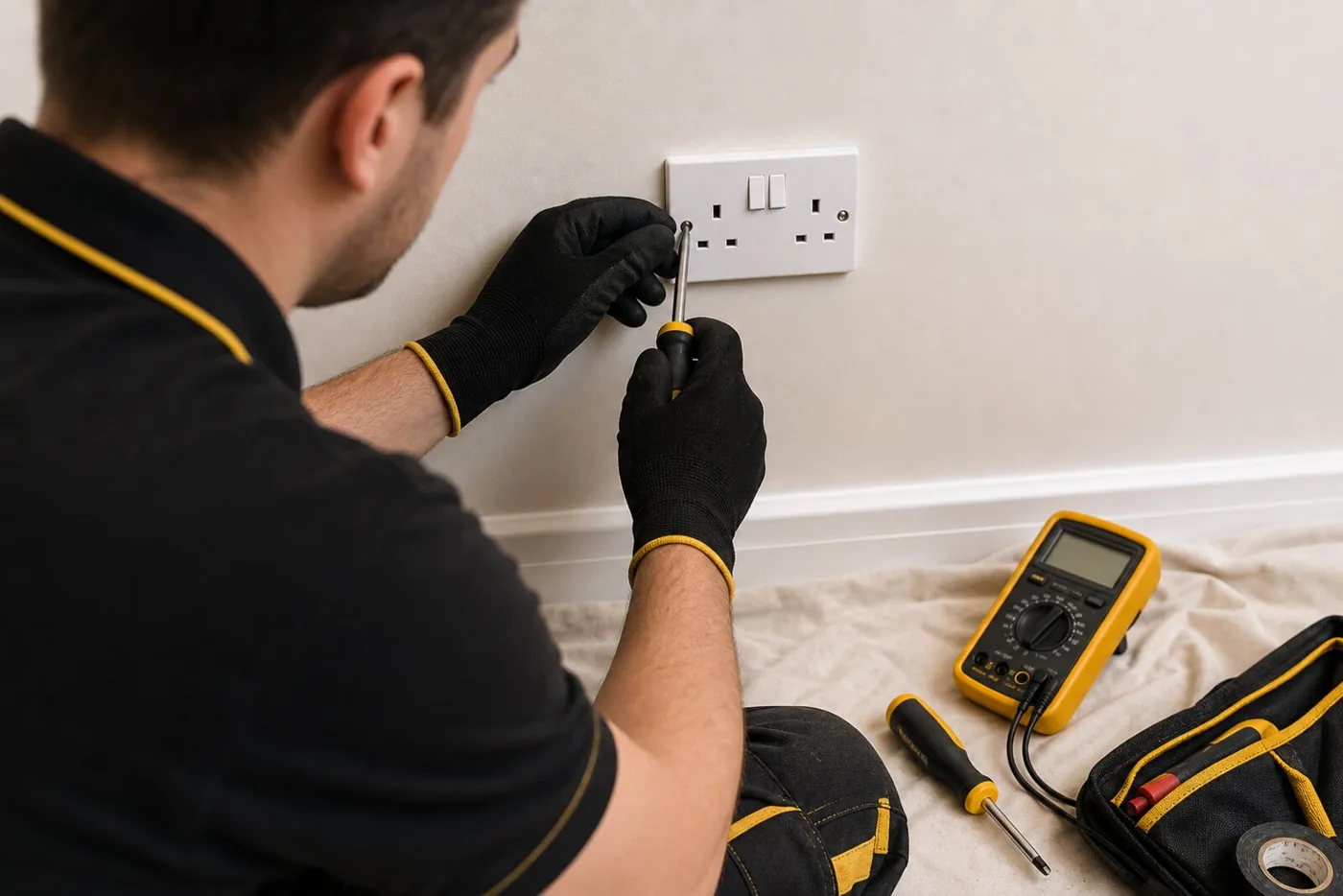
If you are regularly relying on extension leads in the same spot, that is often the real answer. A couple of properly placed extra sockets is normally neater, safer and more convenient than leaving a temporary setup in place for years.
When to stop using an extension lead
Stop using it if the plug, cable, sockets or casing show heat marks, cracking, looseness or damage. The same applies if it feels unusually warm, the plug does not sit properly in the wall socket or there is any buzzing, smell or intermittent power loss.
If one area of the house keeps ending up with overloaded adaptors and extension blocks, it is better to solve the layout properly. For some households around Doncaster that means adding sockets; for others it means checking whether an older circuit or damaged accessory is part of the problem too.
Extra socket installation and circuit checks in Doncaster
Cable reels and extra sockets have different limits
Fully unwind a cable reel before use and check its rating and instructions. A coiled reel can retain heat. Keep leads uncovered, away from rugs and clear of places where furniture or doors can crush them.
Adding fixed sockets can improve the layout but does not automatically increase a circuit's capacity. Tell the electrician which appliances run together so the circuit can be assessed, particularly in kitchens, utility rooms and home offices.
Quick extension lead checks
- Do not plug one extension lead into another.
- Keep high-load appliances off multi-way leads wherever possible.
- Check for heat marks, loose plugs, cracked casings and damaged cable.
- Be cautious with generic online-bought leads with poor labelling or no clear maker details.
- If the same room always needs extensions, consider adding fixed sockets instead.