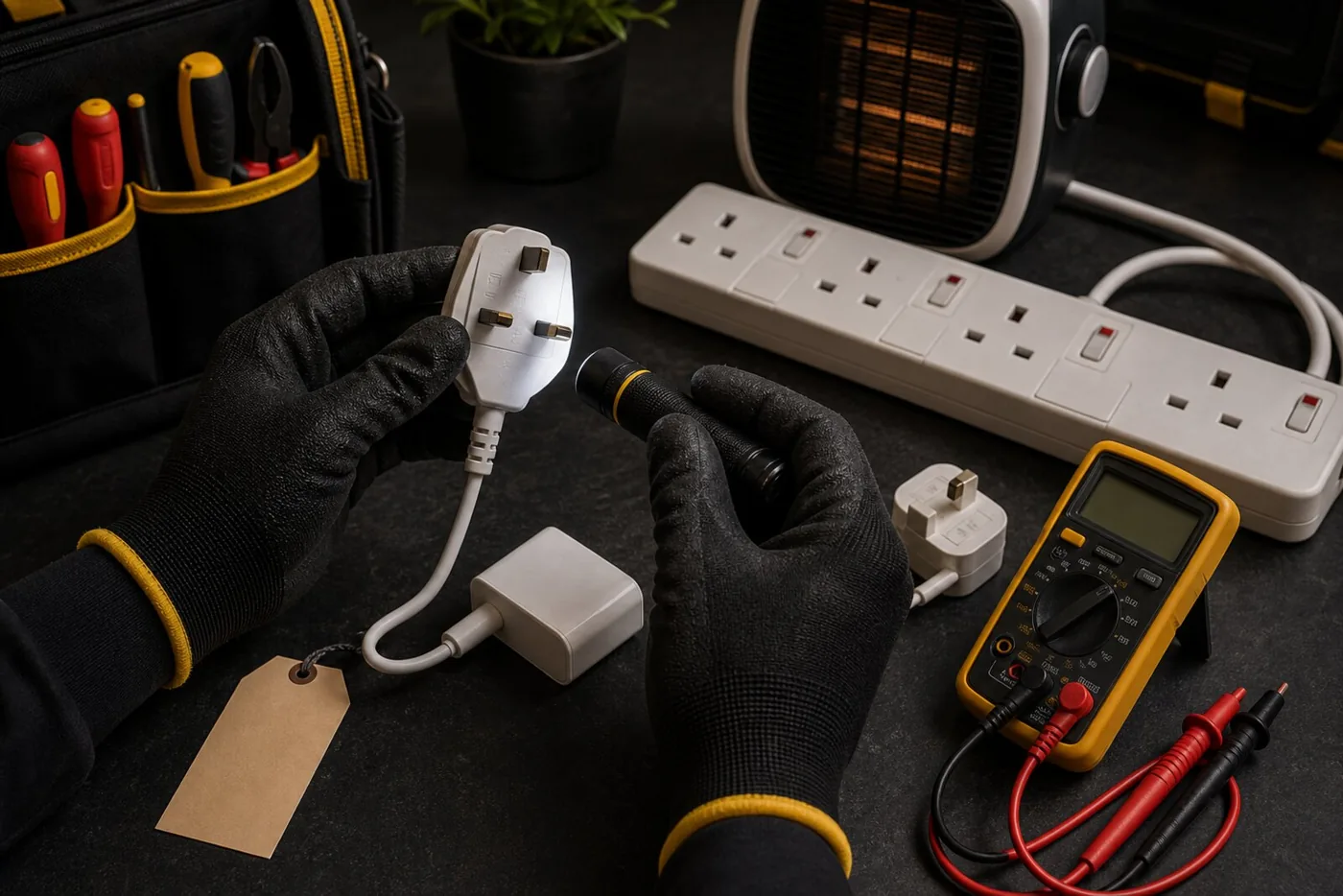
E-bikes, e-scooters, cordless tools, garden kit and rechargeable household devices have made battery charging part of normal home life. The awkward bit is that a charger often ends up wherever there is a spare socket: hallway, kitchen worktop, garage, under the stairs or next to coats and boxes.
For Doncaster homes and small premises, the practical safety check is simple. Think about where the battery sits while charging, what socket it uses, whether the route out of the property stays clear, and whether any warning signs point to an electrical fault rather than just a product problem.
Why this is worth checking now
GOV.UK's OPSS report on 2024 e-bike and e-scooter fires recorded 211 notified fires involving these products, with many occurring in indoor or residential settings. OPSS is careful that the data is not a full national estimate, but it is still a useful warning about where charging and storage habits can matter.
Electrical Safety First also warns that lithium-ion batteries can present a severe fire risk if they are used, charged or sourced incorrectly. That does not mean every battery is unsafe. It does mean damaged kit, poor chargers, blocked exits and overloaded sockets deserve attention before they become normal.
Start with the charging position
Avoid charging a battery where it would block the front door, hallway, stairs or the route from bedrooms to an exit. If a fire starts, you need the way out to remain usable. A garage, utility area or clear room may be better than a narrow hall, provided the socket and surroundings are suitable.
Keep chargers and battery packs away from coats, cardboard, soft furnishings, bedding, curtains and direct heat. Do not cover a charger while it is running. If the only available socket forces unsafe charging habits, it may be time to plan a better socket position rather than keep stretching leads through the house.
Use the right charger and watch for warning signs
Use the charger supplied by the manufacturer or an approved replacement from a reputable source. Mismatched or poor-quality chargers are not worth the saving, especially for larger batteries. Registering products can also make recall notices easier to receive.
Stop using and charging a battery if it is swollen, dented, unusually hot, leaking, making a noise or smelling odd. For the fixed electrical side, get advice if the socket is cracked, loose, warm, buzzing, discoloured or if the circuit trips while charging.
Stay awake and at home while an e-bike or e-scooter battery charges, let it cool after use and follow the maker's charging instructions. If a battery starts smoking or catches fire, get out, stay out and call 999. Do not try to carry a burning or smoking battery through the house.
Do not turn one socket into a charging station by accident
One double socket can quickly end up feeding a scooter charger, tool batteries, phone chargers, laptops and other devices. That is where extension leads and multi-way adaptors become a bad long-term answer, especially if they are coiled, damaged, covered or left running overnight.
If the same area is always short of sockets, a proper extra socket or dedicated circuit check may be safer and neater. The existing circuit still needs checking first, because adding more outlets does not fix an overloaded, damaged or repeatedly tripping circuit.
RCD protection and alarms still matter
Electrical Safety First advises RCD protection for the socket being used, because an RCD can reduce the risk of electric shock if a product is faulty. If you are unsure whether a circuit has RCD protection, a photo of the consumer unit is a useful starting point for an electrician.
Smoke and heat alarms should also suit how the property is used. If charging happens in a garage, utility room or outbuilding, think about whether an alarm would actually warn people in time. Mains-wired alarms, damaged sockets and tripping circuits should be checked properly rather than guessed at.
An RCD does not prevent every battery fire: an internal battery failure can happen without a fault that trips it. We can assess the fixed socket and circuit; damaged battery packs and chargers should go through the manufacturer or an appropriate specialist.
Quick battery charging check
- Keep e-bikes, e-scooters and large batteries off escape routes while charging.
- Use the original or manufacturer-approved charger from a reputable source.
- Unplug once charging is complete and avoid leaving larger batteries on charge overnight.
- Keep chargers away from bedding, coats, boxes, direct heat and covered spaces.
- Get electrical advice for warm sockets, buzzing, damage, burning smells or repeated tripping.