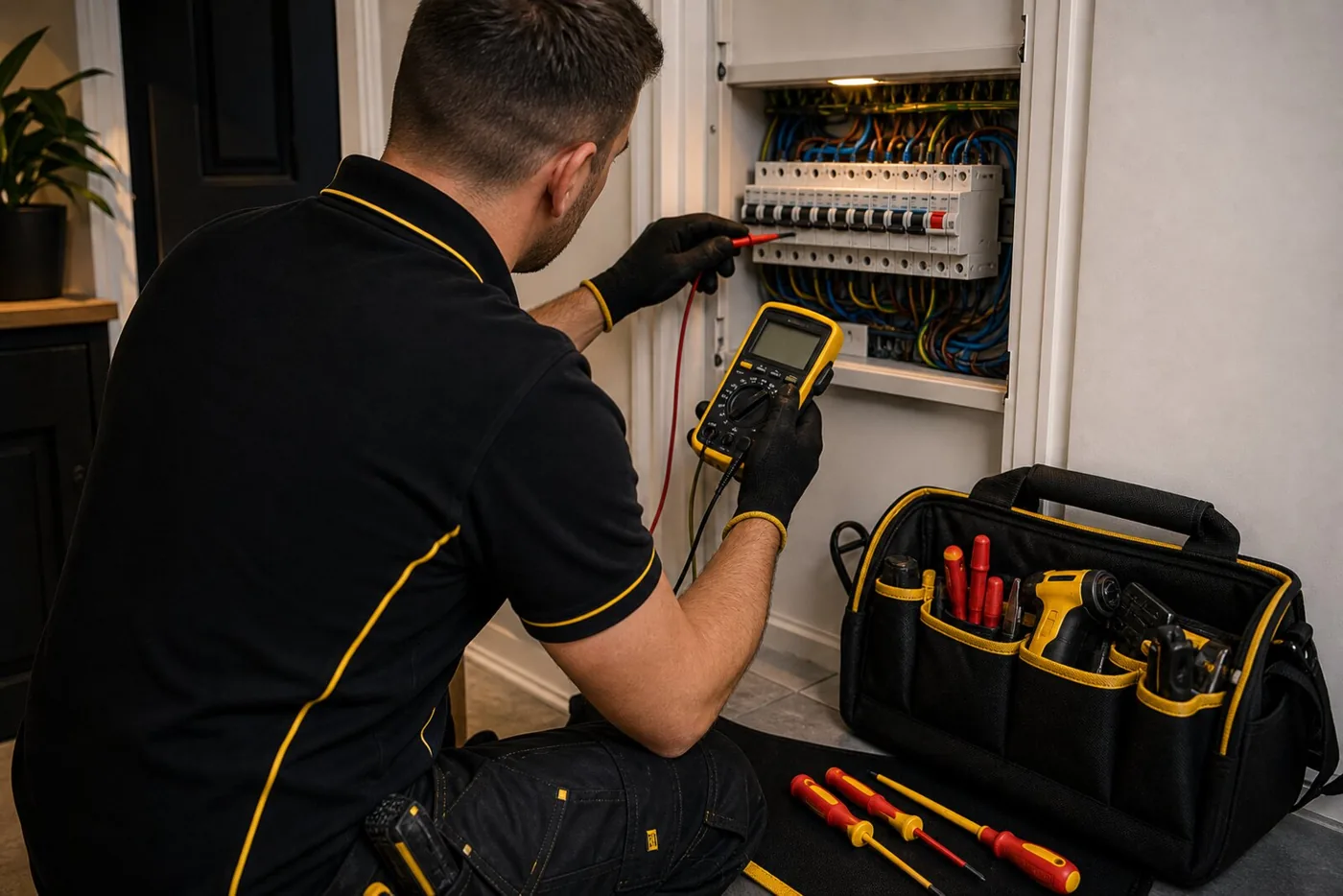
One of the awkward things about electrical faults is that the installation can still seem to be working while the warning signs are already there. A socket still powers the lamp, the lights still come on and the tripping only happens now and then, so people put it off.
That is exactly the sort of habit the IET warned about in April 2026. Its research found most people think their home electrics are safe, while a smaller but still worrying number admit to ignoring warning signs such as burning smells, buzzing or flickering lights.
1. Buzzing, crackling or a burning smell
These are not harmless background quirks. Electrical Safety First says burn marks on plugs and sockets, sounds of arcing such as buzzing or crackling, fuses blowing and circuit-breakers tripping are all signs the electrics should be checked as soon as possible.
In practice, the problem may be a loose connection, a damaged accessory, overheating at a socket or a fault that only shows up under load. Around Doncaster, this often turns up in kitchens, utility rooms and older extensions where one area has had years of heavy use.
Stop using the affected fitting. Switch off the circuit only if you can do so safely without going near heat, exposed wiring or water. If there is smoke or fire, get out, stay out and call 999. Do not wait for a quote reply or remove a cover to investigate.
2. Circuits trip more than once, especially without an obvious cause
A single trip after a clear fault is one thing. Repeated tripping, wet-weather faults, a breaker that will not stay on or a circuit that drops out only when certain items are used is different.
Electrical Safety First says periodic inspection and testing can reveal overloaded circuits, shock risks, fire hazards and defective work. If the same circuit keeps causing trouble, it is usually better to find the actual fault than keep resetting it and hoping for the best.
3. Damaged sockets, switches or tired-looking wiring
Cracked accessories, loose faceplates, discolouration, old cable sheathing or fittings that feel warm to the touch are all worth taking seriously. Some homes still have wiring or accessories from much earlier work, and the age of the installation is not always obvious until someone starts looking closely.
Electrical Safety First notes that an inspection checks the serviceability of sockets, switches and light fittings, along with the type and condition of the wiring system. If a house in Balby, Wheatley or Bentley has been altered bit by bit over the years, small visible defects can be a clue that the wider installation deserves a proper look.
4. The installation has not been checked in a long time
This is the one many homeowners skip simply because nothing dramatic has happened yet. Electrical Safety First recommends inspection and testing every 10 years for an owner-occupied home and every 5 years for a rented home.
The IET made the same point in April 2026, urging people to get their home electrics checked, particularly if it has been over ten years since the last inspection. If you do not know when the last proper test was done, that is useful information in itself.
5. The house has changed, but the electrics never really caught up
A spare bedroom becomes an office, the garage gets more equipment, the kitchen gains more appliances, or an old conservatory starts being used year-round. The electrical load and layout change, but the original socket positions, circuit arrangement and protection often stay exactly as they were.
That mismatch is where we regularly see extension leads becoming permanent, sockets doing too much work and older circuits being stretched beyond what they were really planned for. Sometimes the answer is a repair, sometimes extra sockets, and sometimes an EICR is the sensible first step before deciding what comes next.
Fault finding for buzzing, overheating and tripping electrics
A quick home electrics sense-check
- Do not ignore burning smells, buzzing, crackling or scorch marks.
- Take repeated tripping seriously, even if the power comes back on after a reset.
- Check sockets, switches and visible cable runs for damage, looseness or heat.
- If the property has not had an inspection in around 10 years, consider getting one booked.
- If the way you use the house has changed, check whether the electrics still suit it.