Lighting changes the feel of a room more than most people expect. It also affects running costs, reliability and how easy a space is to use.
For a useful LED upgrade, compare brightness in lumens, choose the colour of light you want and check that lamps, fittings and controls are compatible. A straightforward bulb replacement and a change to fixed wiring are different jobs.
Start with the rooms you use most
Kitchens, hallways, living rooms and home offices usually benefit most from better lighting. These areas are used often, so poor fittings or awkward switching become annoying quickly.
A good upgrade might include LED downlights, pendants, under-cabinet lighting, better switches or repaired wiring where old fittings have become unreliable.
Lumens, watts and colour temperature
Lumens describe light output; watts describe electrical power used. Compare lumens when replacing an old bulb so a lower-wattage LED still gives the brightness you need. Also check the lamp cap, physical size and whether it is suitable for the fitting.
Colour temperature is shown in kelvin. Lower values give a warmer appearance and higher values a cooler one. Compare samples where possible, and use a consistent choice in fittings that can be seen together. A kitchen worktop may need different lighting from a bedside lamp.
Check dimmers and old fittings
Not every old dimmer works well with LED lamps. Flickering, buzzing or lamps that will not dim properly can be caused by incompatible controls or poor-quality fittings.
The lamps must be dimmable and the dimmer must suit that LED load. Check the manufacturer compatibility information and permitted number of lamps rather than using the old halogen wattage rating as a guide. Drivers or transformers in older low-voltage fittings also need checking.
Flickering is not always a dimmer issue. If there is crackling, heat, a burning smell or several circuits are affected, stop using the affected equipment and arrange fault finding. Do not open switches or modify a fitting to experiment.
When flickering, buzzing or tripping needs fault finding
Bulb replacement or a new light fitting?
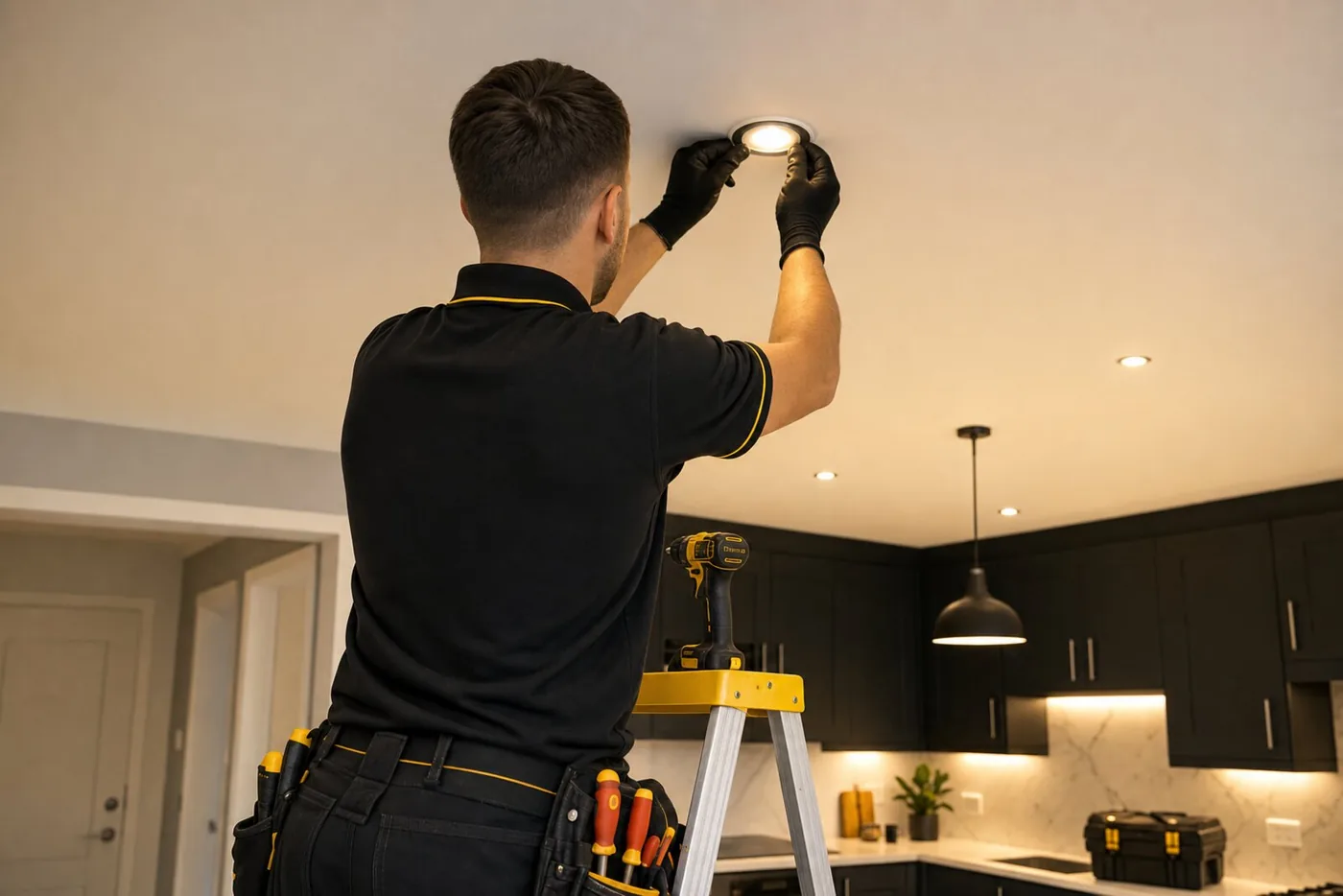
An accessible replaceable bulb may be a simple change when the replacement is suitable and the supply is off. An integrated LED fitting contains its own light source; changing the complete fitting or its fixed wiring is work for an electrician.
Before replacing downlights, check the opening size, ceiling construction and any insulation above. Bathroom zones, outdoor exposure and the fitting instructions affect the choice. Do not cover an old downlight with insulation or assume a new fitting fits safely because the hole is the right size.
Plan light where you need it
A single ceiling light can leave a kitchen worktop in shadow or create glare on a home-office screen. Think about the task and where you stand or sit, then decide whether extra task lighting, a different fitting or a separate control would help.
For a Doncaster lighting quote, send photographs of the room and fittings, the number of points involved and details of dimmers. Mention ceiling access and planned decorating so cable routes and making-good can be allowed for.
Lighting installation and LED upgrades in Doncaster
Outdoor and security lighting
LED floodlights and PIR lighting can be useful for driveways, gardens and side paths. The important details are aiming, sensor position, cable routing and weather protection.
A badly positioned floodlight can annoy neighbours or miss the area you wanted to cover. Planning the fitting location first usually gives a cleaner result.
Before upgrading lighting
- Decide whether you need task lighting, general lighting or security lighting.
- Check whether existing dimmers are LED compatible.
- Choose fittings suitable for bathrooms, kitchens or outdoor locations where needed.
- Think about switching positions before decoration starts.
- Ask for old or damaged wiring to be checked before new fittings go in.