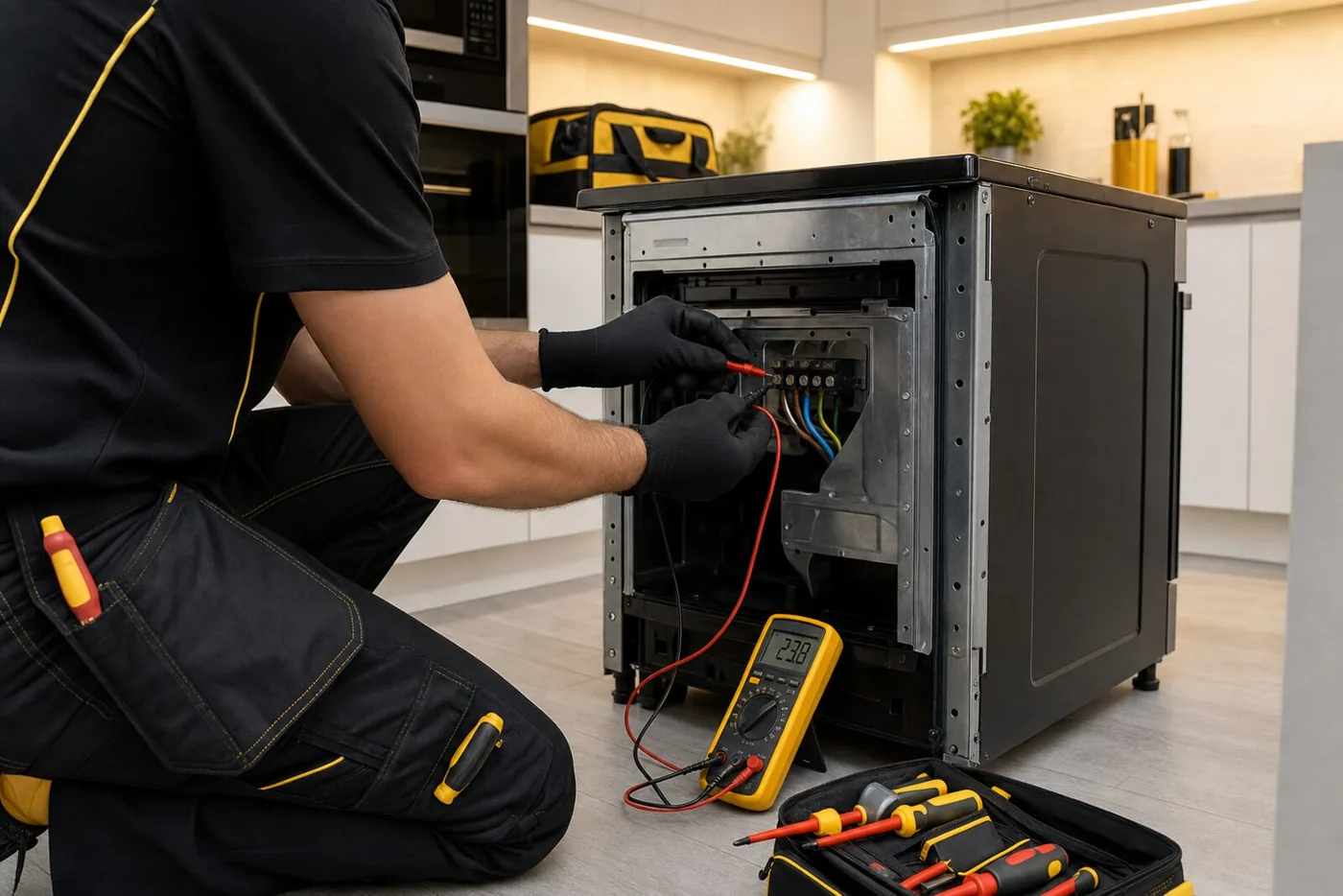
Kitchen electrical work often starts with a simple question: can the new cooker, oven or hob go where the old one was? Sometimes the answer is yes. Sometimes the appliance rating, cable, cooker switch or consumer unit means the job needs checking before anything is connected.
For Doncaster homes, the useful thing is to look at the electrics before the kitchen fitter has boxed everything in. That gives time to sort the cooker point, sockets, isolation switches and any tripping or heat marks properly.
Check the appliance rating before assuming the old circuit is fine
Cookers, ovens and hobs do not all need the same supply. A like-for-like swap may still need the appliance rating, cable size, connection point and local isolation checked. A bigger hob or a different oven-and-hob arrangement can change the electrical load.
Send the appliance model, rating plate or installation instructions before booking the work. A photo of the consumer unit and existing cooker switch also helps decide whether the job is likely to be a straightforward connection or needs a circuit check first.
A single oven may be designed for a plug connection, while a separate hob or range cooker may need a different arrangement. Follow the exact model instructions. An induction hob is not automatically a like-for-like replacement for the old hob, even when it fits the same worktop opening.
Cooker, oven and hob connection work in Doncaster
Do not bury the only isolation point behind the appliance
Electrical Safety First advises that large kitchen appliances fitted under worktops should ideally be controlled by an accessible switch above the worktop. If a dishwasher, oven or washing machine develops a fault, you need a sensible way to isolate it.
During a refit, ask where the isolator, connection unit and sockets will actually sit once cabinets, splashbacks and appliances are fitted. Good access matters more than a neat drawing that cannot be reached later.
Keep sockets and switches away from water where possible
Kitchens mix water, heat, trailing leads and higher-powered appliances. Electrical Safety First recommends keeping socket-outlets and switches at a safe distance from the sink, with at least 30cm horizontally where possible.
If the current socket layout forces kettles, microwaves or small appliances into awkward places, adding or moving sockets during the kitchen work is usually cleaner than relying on extension leads after the new units are fitted.
Warning signs to deal with before the new appliance goes in
Do not connect a new cooker or oven to a setup that already has heat marks, buzzing, crackling, a loose switch, damaged cable or repeated tripping. Those symptoms need checking rather than hiding behind a fresh appliance.
The same applies if an old oven has been hard to isolate or if a previous owner has altered the kitchen wiring. Testing before connection can prevent a small installation job turning into a fault call-out a week later.
Think about the whole kitchen, not just the cooker point
A kitchen plan may include an oven, hob, extractor, fridge freezer, dishwasher, washer, microwave, boiler controls, under-cabinet lights and worktop sockets. Not all of those need new circuits, but the layout should be reviewed as a whole.
If the consumer unit is older or already short on RCD protection, the electrician may recommend checking the board and protective devices before adding more load or changing the kitchen wiring.
Before fitting a new cooker, oven or hob
- Find the appliance make, model and electrical rating before booking the connection.
- Take photos of the consumer unit, cooker switch and existing connection point.
- Check whether the isolator will still be reachable after the kitchen is fitted.
- Plan sockets away from the sink and where appliances will actually be used.
- Get heat marks, buzzing, damaged accessories or repeated tripping checked first.