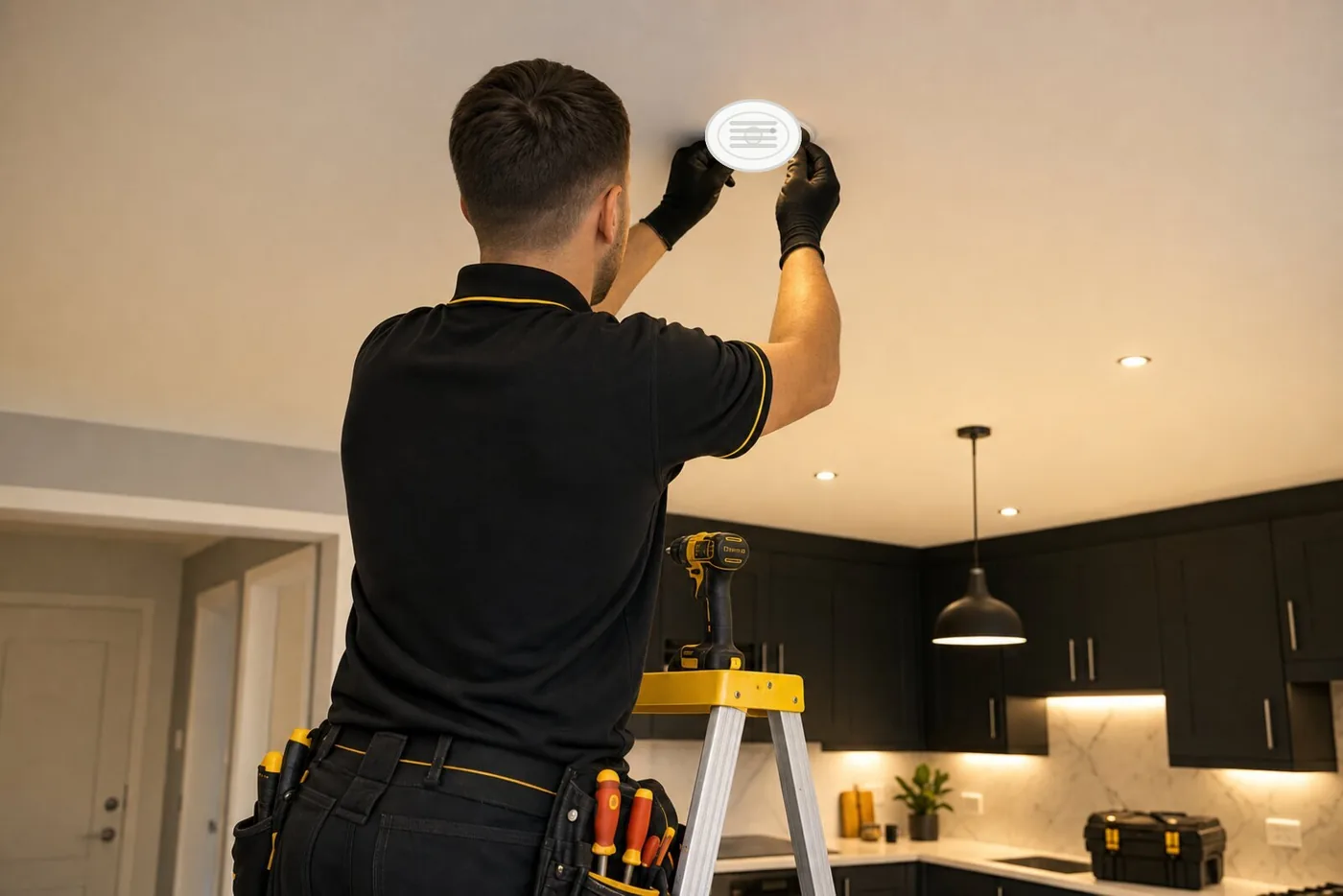
Smoke and heat alarms are easy to ignore because most of the time they sit there quietly and do nothing. That is exactly why people forget to test them, put off replacing old units or leave a chirping alarm for later.
Start with three things: whether every alarm responds to its test button, whether it is within its replacement date and whether the alarms cover the current layout. A mains connection does not remove the need to test or replace an ageing detector.
Smoke alarm or heat alarm: what is the difference?
Smoke alarms respond to smoke; heat alarms respond to heat and are commonly used in kitchens where ordinary cooking can trigger a smoke detector. They are not interchangeable throughout the house. Hallways, landings, kitchens and converted spaces need a layout suited to the property.
Interlinked alarms are designed so that an alarm in one area can warn people elsewhere. That matters if a kitchen or downstairs detector would be difficult to hear from a bedroom. When replacing a head, compatibility with the existing base and interlink system needs checking.
The two checks most people skip
Test every alarm using its test button and follow the manufacturer's instructions. South Yorkshire Fire and Rescue recommends weekly testing. Where alarms are interlinked, follow the system instructions to check that the other alarms respond too.
The second is the age of the alarm itself. Electrical Safety First says smoke alarms usually have a lifespan of around 10 years. An alarm can still make a noise on test and still be too old to rely on properly in a real fire.
Hard-wired alarms are not fit-and-forget
A lot of households assume a mains-wired smoke alarm will look after itself because it is connected into the electrics. That is not really how it works. The sensor head still ages, and some units also have backup batteries that eventually need replacing or the whole head needs changing.
Electrical Safety First says that if a mains-wired smoke alarm is older than 10 years, it is recommended that the detector head is replaced by a registered electrician. If the alarm is chirping, not responding properly, discolouring or repeatedly false alarming, it is worth getting it looked at rather than just silencing it.
Why does a smoke alarm keep beeping?
A periodic chirp may be a battery, end-of-life or fault signal. The meaning varies by model, so check the indicator pattern against the manual. Record the make, model, replacement date and whether other alarms are doing the same thing before asking for help.
Do not remove batteries or disconnect a mains supply to live without protection. If the alarm sounds continuously, treat it as a possible fire first. With smoke, fire or uncertainty about your safety, get out, stay out and call 999.
Basic layout still matters
Electrical Safety First advises a minimum of one smoke alarm per floor, with a heat detector in the kitchen, and enough coverage for the parts of the house where a fire could start. In older Doncaster terraces and larger altered houses, the weak spot is often not the alarm itself but the fact that coverage has not kept up with layout changes.
Loft conversions, garage conversions, added utility spaces and long hallways can all change what sensible coverage looks like. If the property has been altered over time, it is worth checking whether the alarm layout still matches the way the house is actually used now.
When to get an electrician involved
If you have mains-wired alarms and one is out of date, dead, constantly beeping or not interlinking properly, it is sensible to get it checked. The same applies if a lighting circuit trips, an alarm loses power, or you are not sure whether the existing setup is battery-only or tied into the installation.
For some homes around Doncaster, the answer is just replacing tired detector heads. In others, especially where work has been done in stages over the years, it may be worth checking the wider circuit arrangement at the same time so the alarms are not being treated as an afterthought.
A quick smoke and heat alarm check
- Test each alarm weekly, following the manufacturer instructions, and check any interlink.
- Check the manufacture or expiry date on each unit if you can reach it safely.
- Replace or investigate alarms that are around 10 years old.
- Make sure there is at least one smoke alarm per floor and a heat alarm in the kitchen.
- If a mains-wired alarm is unreliable, arrange for an electrician to check it properly.