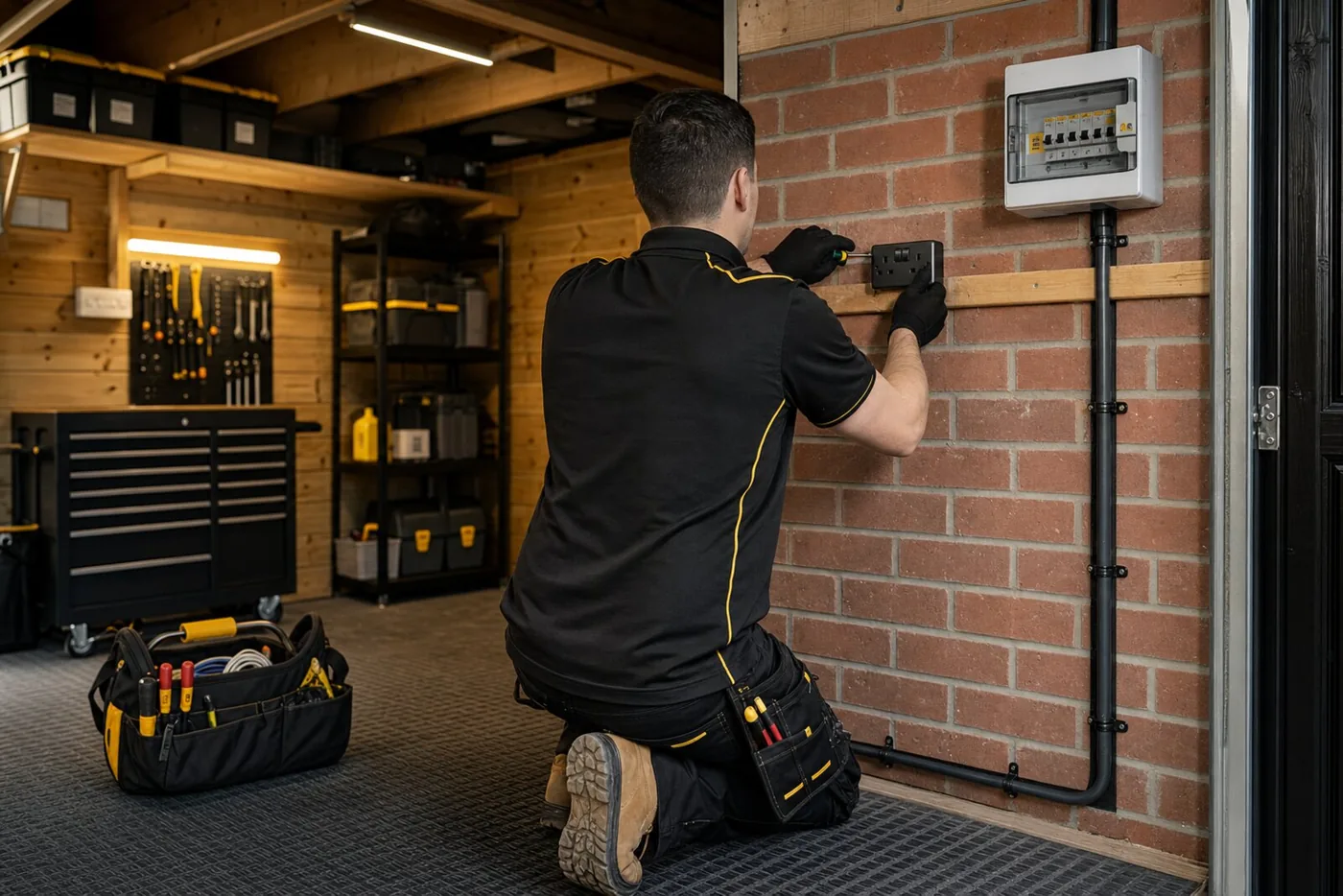
Garages, sheds and garden offices tend to show electrical problems when the weather changes. Damp gets into old fittings, extension leads become a permanent habit, and a circuit that seemed fine in summer starts tripping when heaters, chargers or tools are used more often.
For Doncaster homes and small premises, autumn is a sensible time to check outbuilding power before the darker, wetter months. The aim is not to overcomplicate it: look at the supply route, socket condition, RCD protection, lighting and any warning signs before you rely on the space every day.
Start with how the outbuilding is actually used
A garage used for one freezer and a light is a different job from a workshop, gym, tumble dryer space or garden office. Make a quick list of what is plugged in now, what is likely to be added, and whether anything runs for long periods unattended.
NICEIC notes that outbuilding supplies may need the electrician to consider the route from the house, the expected load, the existing consumer unit and whether a separate local consumer unit is needed. A few photos and a clear equipment list make the first conversation much more useful.
For a quote, include the approximate distance from the house and whether the route crosses lawn, paving or a driveway. Mention a freezer that must stay on, planned heating and any heavy tools. Those details affect the supply design and access needed; the number of sockets alone does not describe the job.
Garage and outbuilding power installation in Doncaster
Check sockets, plugs and extension leads before winter
Look for cracked socket fronts, loose plugs, scorch marks, buzzing, crackling, heat, broken covers or sockets that only work when the plug is held a certain way. Those are repair signs, not little quirks to live with.
Electrical Safety First warns not to ignore burn marks, arcing sounds, blown fuses, tripping breakers or fittings that feel hot. In an outbuilding, those signs matter even more because damp, dust and physical damage can all make small faults worse.
RCD protection matters for outdoor and outbuilding use
Electrical Safety First advises using an RCD with outdoor electrical equipment, and NICEIC says outdoor socket-outlets should be RCD-protected. An RCD is there to cut the supply quickly when a fault is detected; it is not a substitute for safe wiring, but it is an important layer of protection.
If you do not know whether the garage or shed supply has RCD protection, send a photo of the consumer unit and any small board in the outbuilding. If a breaker or RCD keeps tripping, stop repeatedly resetting it and get the fault checked.
Weatherproof equipment needs to stay weatherproof
Outside sockets, cable routes and garden connections should be suitable for outdoor use. NICEIC advises that outdoor socket-outlets should be weatherproof and have the right IP rating, with outdoor cabling suitable for the conditions and protected from damage.
Before autumn rain and winter frost, check that covers shut properly, cables are not crushed under doors, and any visible outdoor cable has not been damaged by garden tools, vehicles or pets. Do not run indoor extension leads through windows, doors or puddles as a long-term answer.
Lighting and heating can change the load quickly
Darker evenings often mean more lighting, security lights and plug-in heaters. A cold garden office can quickly become a socket-heavy space with a heater, laptop, monitor, printer, router and chargers all running together.
If the space now does more than it was originally wired for, get the supply checked before adding another multi-way lead. Extra sockets or better lighting may be straightforward, but the existing circuit and protection need checking first.
Quick autumn outbuilding electrics check
- List what is plugged in now and what will be used through autumn and winter.
- Photograph the house consumer unit, outbuilding board and any outdoor sockets.
- Check for cracks, scorch marks, buzzing, heat, loose fittings or repeated tripping.
- Make sure outdoor sockets and covers are still weatherproof and undamaged.
- Avoid permanent extension leads through doors, windows or damp areas.