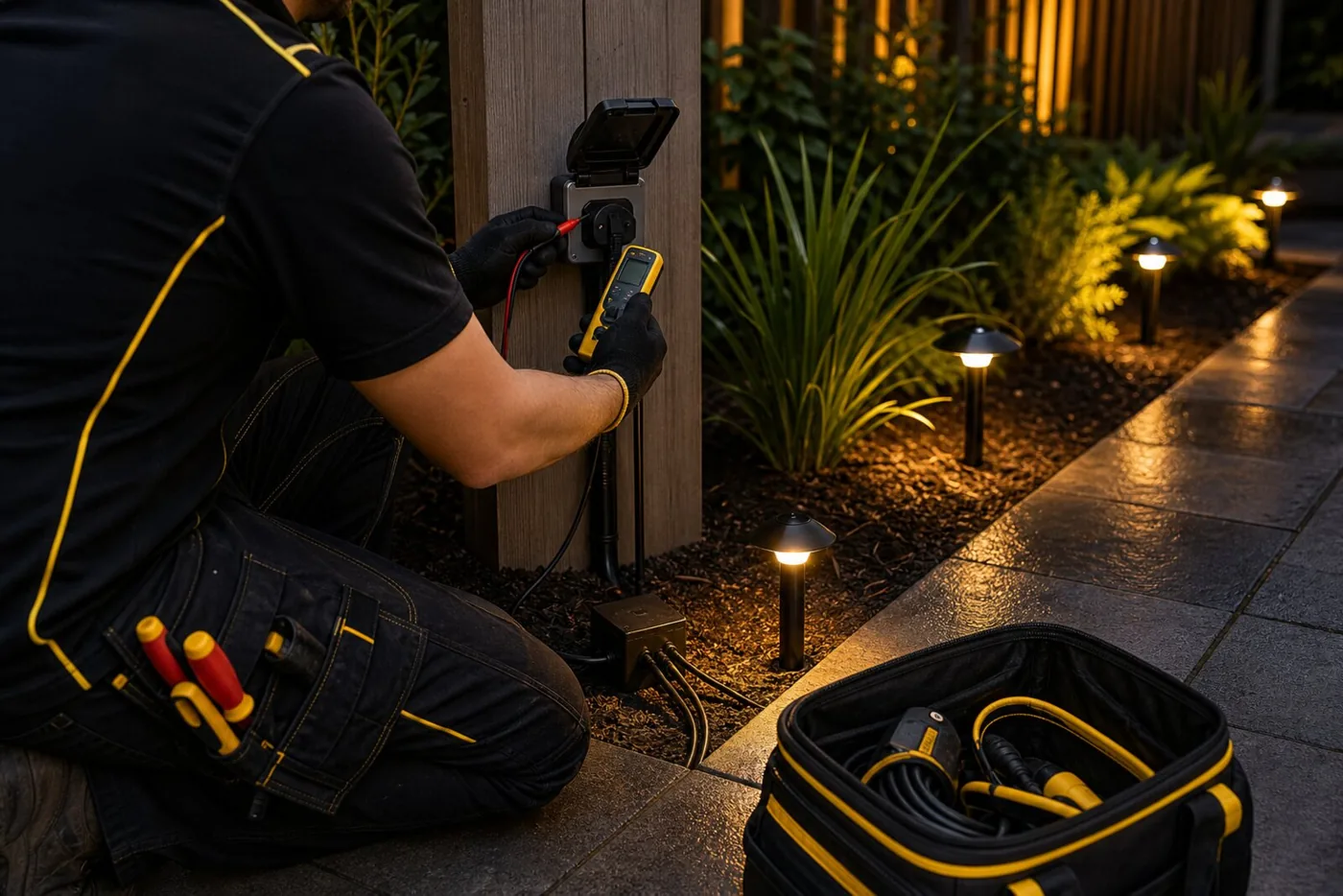
Outdoor sockets make life easier for lawn tools, patio lights, ponds, outbuildings and general garden use. They also sit in a tougher environment than a socket inside the house.
A suitable installation needs more than a weatherproof box: the existing circuit, RCD protection, cable route, likely load and socket position all need checking. For a Doncaster garden, start by listing what you want to power and where it will be used.
RCD protection matters
Electrical Safety First advises using an RCD with outdoor electrical equipment. A socket that might be used for a lawnmower, hedge trimmer or other power tool should have RCD protection.
If you are not sure whether your garden socket or circuit is RCD protected, have it checked before relying on it. An RCD reduces risk but does not make a damaged cable, wet connection or unsuitable appliance safe.
Why extension leads are not a long-term answer
An extension lead through a window or across a patio might work once, but it is easy for cables to become pinched, wet or damaged. It also encourages overload when more garden equipment is added.
A fixed outdoor socket, fitted in a suitable place with weatherproof accessories and safe cable routing, is usually cleaner and safer.
Understand extension lead ratings and overloading
Weatherproof covers and socket position
Choose an exterior socket suitable for its exposure to rain and accidental knocks. Its weather protection depends on correct installation and the manufacturer's conditions of use, including whether the lid can close properly around the plug and cable.
Think about doors, bins, furniture, watering and the route of the tool lead. A convenient position should avoid stretching cables across a path. Do not assume a box with a high IP rating is waterproof in every situation or suitable for submersion.
Can an outdoor socket use an existing indoor circuit?
Sometimes, but it depends on the circuit arrangement, loading, condition and protection. An electrician needs to assess the available supply before deciding whether an extension is suitable or a new circuit is needed.
Tell us if the plan includes a pond pump, heater or equipment that stays connected for long periods. A lawnmower used occasionally and a garden office heated throughout winter place different demands on the installation.
Think about future use
Before fitting outdoor power, think about how the garden is actually used. A patio socket, a shed supply and security lighting may need different routes and protection.
Planning early avoids awkward cable runs and helps keep the installation tidy.
Plan a garage, shed or garden office electrical supply
Why does an outdoor socket trip when it rains?
Water in an accessory, damaged insulation or connected equipment can cause a fault. Do not repeatedly reset the RCD, open a wet fitting or rely on tape around a broken cover. Leave the affected supply off where it is safe to isolate and arrange fault finding.
Note whether the trip happens with a particular tool connected or after rain, and take a photograph from a safe, dry position. That helps identify whether the socket, cable route or appliance needs investigation.
What affects outdoor socket installation work?
Access to a suitable circuit, the distance to the new point, wall construction and any trenching or paving work all affect the quotation. Send the postcode, a photo of the consumer unit and a wider view showing the proposed socket location.
Ask what testing, certification and making-good are included. Cable routes through a garden should be planned before digging or landscaping starts, with existing services considered.
Outdoor power checks
- Check whether the circuit has RCD protection.
- Use proper weatherproof outdoor accessories.
- Avoid permanent use of extension leads outside.
- Keep cables away from sharp edges, foot traffic and garden tools.
- Ask for testing and certification for new fixed wiring.