England's electrical safety rules now include social rented homes. For social tenancies granted before 1 December 2025, the rules applied from 1 May 2026, with transitional installation and equipment checks required before 1 November 2026.
If you manage rented property in Doncaster, that matters because the rules are not only about fixed wiring. Social landlords also need to keep records for electrical equipment they provide under the tenancy, and remedial work still needs to be dealt with promptly when a report shows a problem.
What changed on 1 May 2026?
GOV.UK distinguishes newer social tenancies from those granted before 1 December 2025. The latter have a transition period: initial checks must be completed before 1 November 2026. May marks the rules applying to those older tenancies, not the end of the inspection window.
Subsequent checks must take place at least every five years, with any earlier date on the report followed. If you manage a Doncaster property, check the tenancy and existing reports before deciding what still needs booking.
What an inspection actually covers
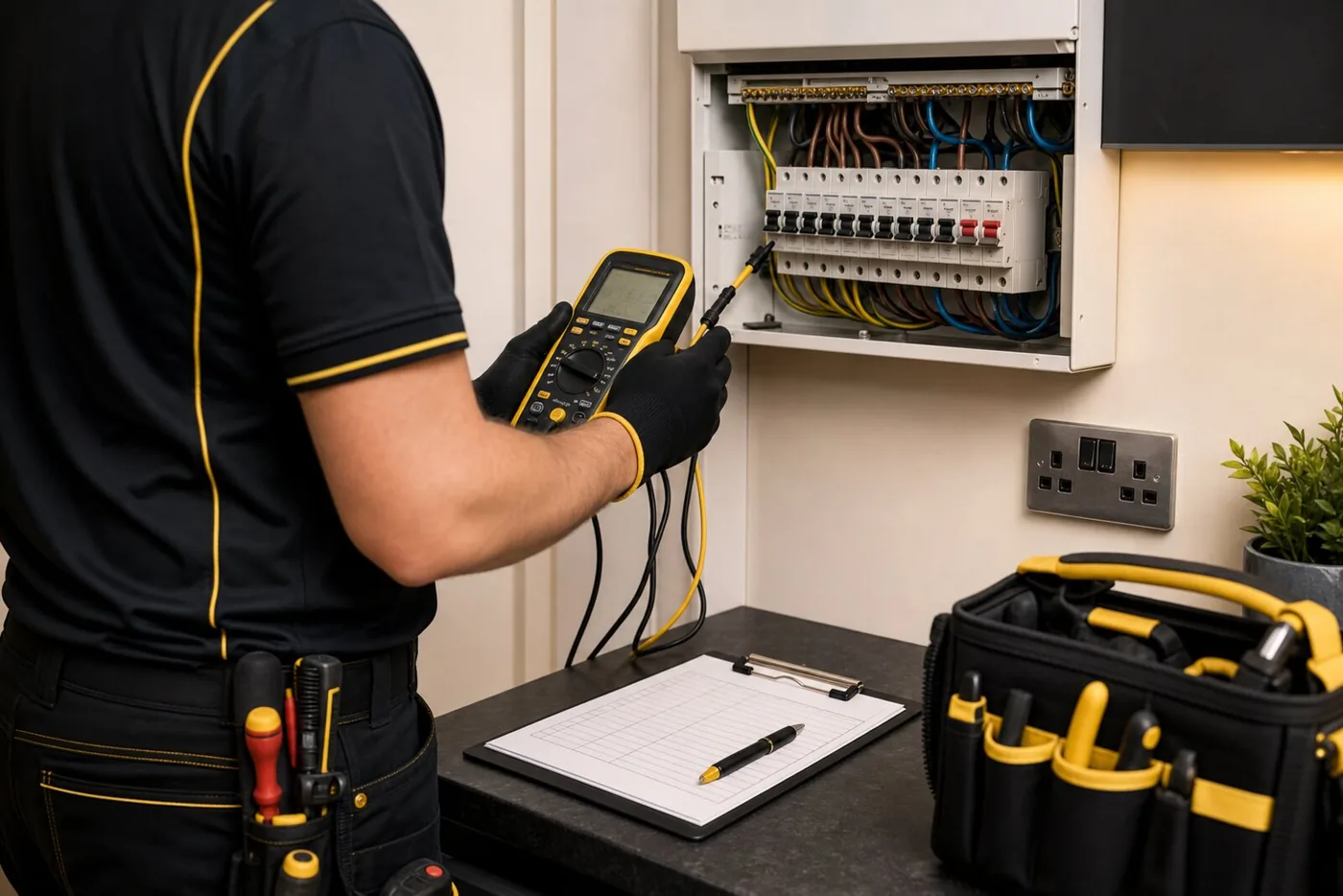
The fixed electrical installation includes the wiring, sockets, light fittings, consumer unit and permanently connected items such as showers or extractors. GOV.UK says the inspection is looking for overload, shock risk, fire hazards, defective work and problems with earthing or bonding.
An EICR records the condition found during inspection and testing. It is useful to have previous reports and certificates available so the inspector can understand earlier work and any limitations, rather than relying on a visual look at the fuse board.
The extra point for social landlords
The newer social housing rules go a step further than many people expect. If the landlord provides electrical equipment under the tenancy, that equipment must also be checked at least every five years and recorded properly.
Examples can include cookers, fridges or microwaves supplied with the property. The equipment record is separate from the fixed-installation report. Keep an inventory and arrange the required equipment checks with a suitably qualified provider alongside the EICR; one should not be assumed to cover the other.
What happens if the report is unsatisfactory?
GOV.UK states that remedial or further investigative work must be completed within 28 days, or sooner if the report says that is necessary. The usual coding still matters: C1 and C2 observations mean the installation is unsatisfactory, while FI means more investigation is needed without delay.
For landlords around Doncaster, the sensible approach is to treat the inspection and the remedial work as one joined-up job. If an older board, damaged accessory, poor bonding or a circuit fault shows up, it is far easier to move straight from report to repair than leave the issue hanging.
EICR inspections and remedial work for Doncaster properties
What should tenants and property managers have ready?
Agree access and any planned interruption to power before the visit. Make sure the consumer unit and sockets can be reached, and explain any essential equipment or needs that affect the appointment. Send the full previous report, not just its front page.
The installation report must be given to the existing tenant within 28 days of the inspection and to a new tenant before occupation. Keep the equipment inventory, reports and repair confirmations together, and record who is responsible for following up any outstanding work.
Why this matters locally
Doncaster has a mix of older terraces, post-war housing and newer rental stock, so there is no single pattern. Some properties have already had consumer unit upgrades and recent inspection work. Others still have a patchwork of old additions, replacement accessories and undocumented changes.
That is exactly where a proper inspection helps. It gives landlords, housing providers and property managers a clear record of condition, what needs attention now and what can be planned sensibly rather than guessed from a quick visual look.
If you manage rented property, check these points
- For social tenancies granted before 1 December 2025, check the transitional requirements before 1 November 2026.
- Check the report date rather than assuming an older certificate still covers you.
- List any electrical equipment supplied with the tenancy.
- Deal with C1, C2 or FI observations promptly instead of waiting for the next void period.
- Keep copies ready for tenants, future inspectors and the local council if requested.